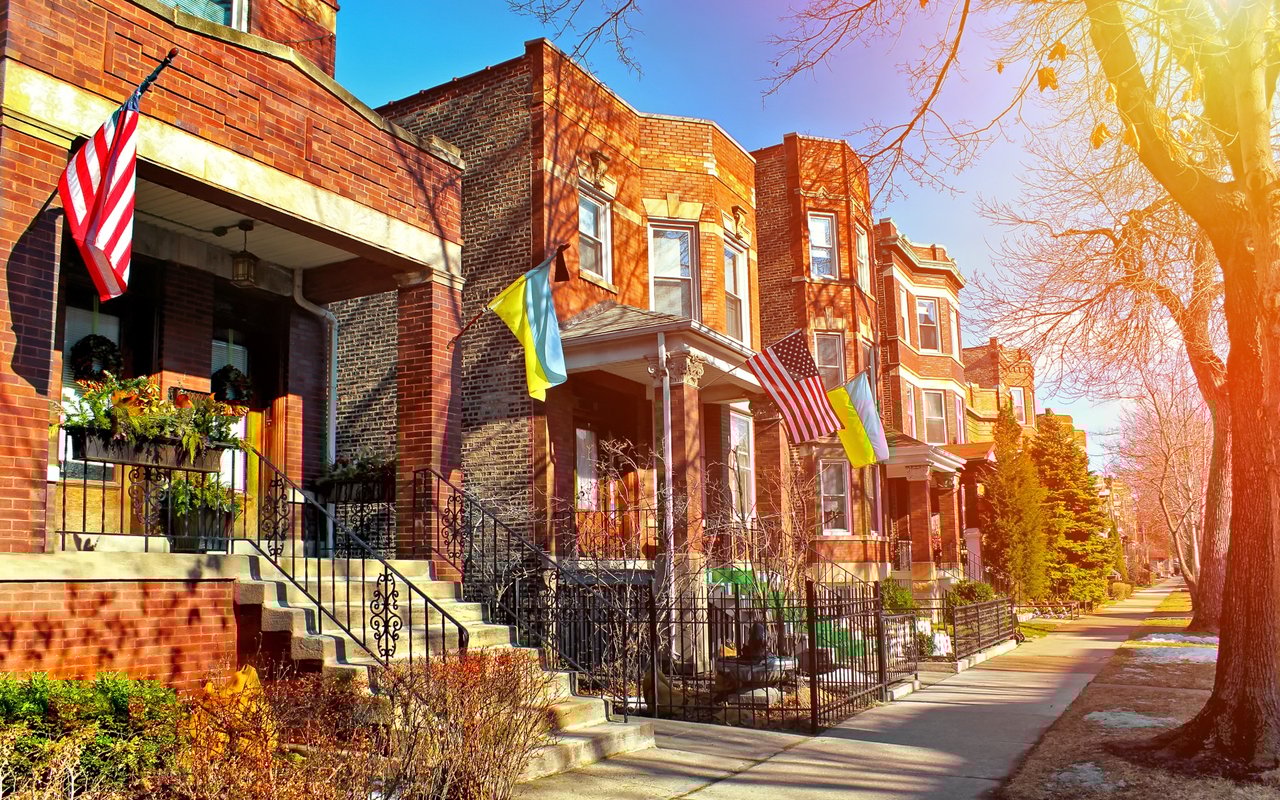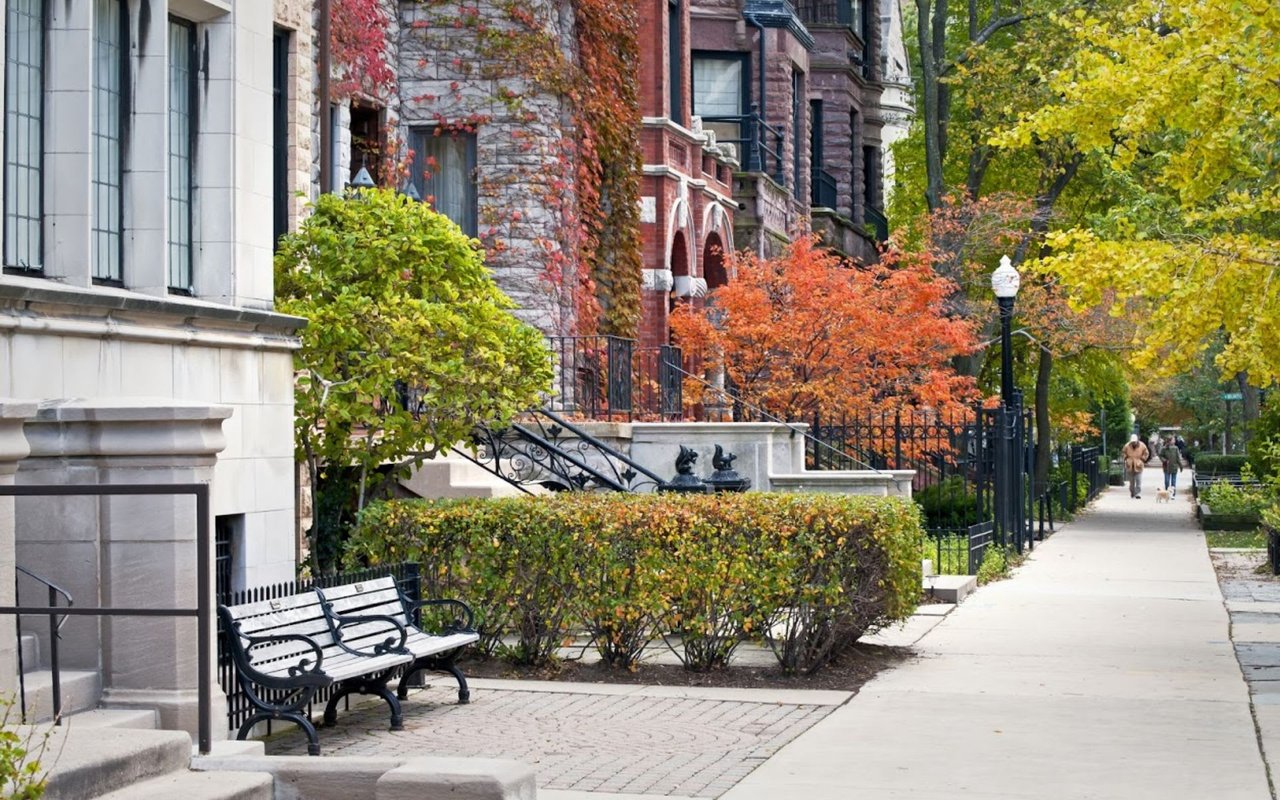
Walk down Chicago Avenue past Damen on a Saturday morning and you will find a line outside a modest storefront before it even opens. People are waiting for a truffle croissant and a longanisa breakfast sandwich at a counter that also happens to run one of the most demanding tasting menus in the country most evenings. A few blocks over, a room shaped like a theater in the round is quietly finishing its first year with a star of its own. And two blocks past that, Old Lviv is doing exactly what it has done for years: serving pierogi to a regular who has never once needed a reservation.
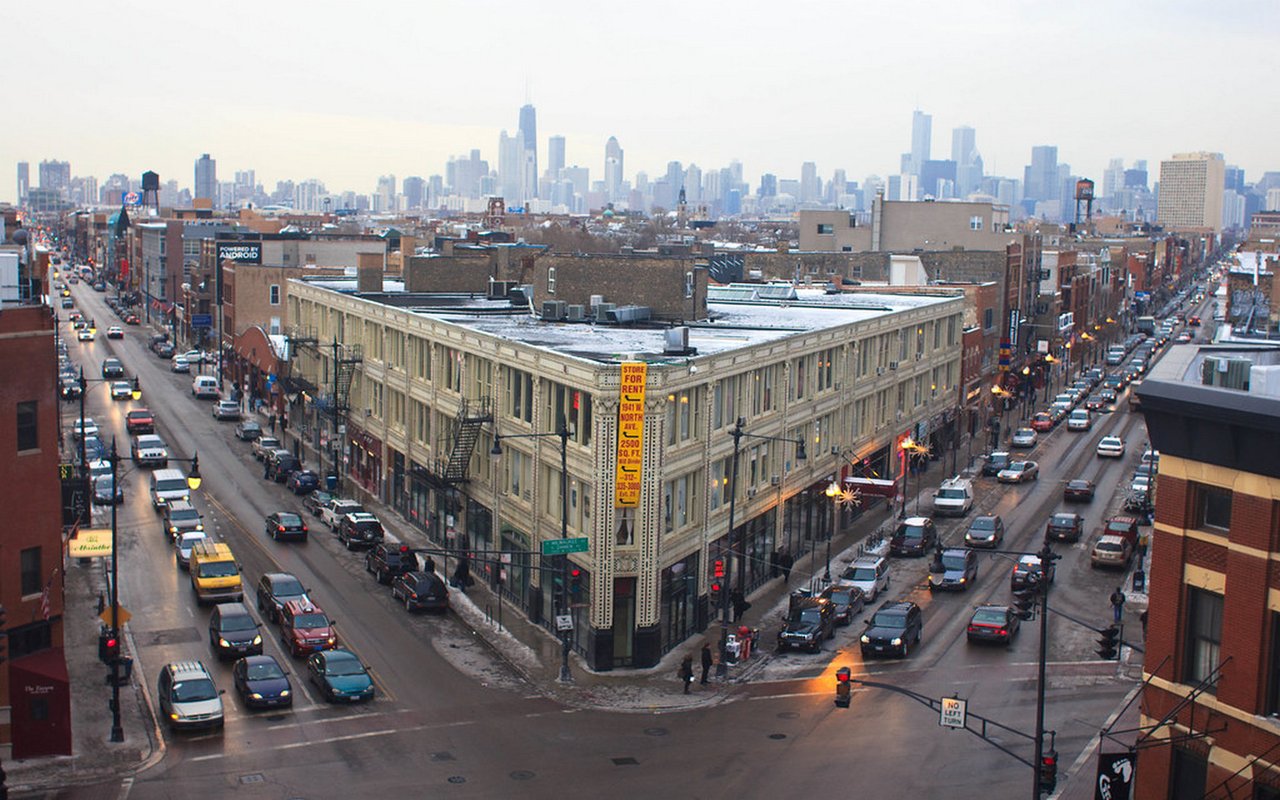
That is the actual shape of food in Ukrainian Village right now, and it is a strange one. In the same six or eight square blocks, you can find some of the most decorated cooking in Chicago sitting next to the same unpretentious spots that gave this neighborhood its character before any of that decoration arrived. Neither side pushed the other out. That is the part worth understanding if you live here.
What happened on November 19, 2025
On that night, at the Michelin Guide's Northeast Cities ceremony in Philadelphia, two Ukrainian Village kitchens walked away with new hardware, and neither result was small.
Kasama, at 1001 N. Winchester Ave., was elevated from one Michelin star to two. Chef-owners Tim Flores and Genie Kwon opened the restaurant in July 2020 as a daytime bakery and counter concept, then added an evening tasting menu during the pandemic. In 2022, Kasama became the first Filipino restaurant in the world to earn a Michelin star. Three years later, it jumped straight to two, putting it in the same tier as Ever and Oriole in the West Loop and Alinea in Lincoln Park.
Block Club Chicago reported that Feld, four or five blocks away at 2018 W. Chicago Ave., earned its first Michelin star the same night, plus something rarer: a Michelin Green Star for sustainable practice, awarded to restaurants that pair culinary quality with a genuine environmental commitment. Chef-owner Jacob Potashnick had opened Feld only about 16 months earlier, sourcing most of what he serves from within a four-hour radius of the restaurant. Feld and Daisies in Logan Square are the only two restaurants in Chicago carrying a Green Star.
The same Block Club Chicago report also captured Potashnick's reaction the next morning, showing how fast this had moved for him. On Instagram, he called the honor wild given how young the restaurant still was, then added a line that reads like a mission statement:
"We are only going to get better, because we've only ever gotten better."
Block Club Chicago's coverage of that night put it plainly: the neighborhood was having a Michelin moment, not just two restaurants. That framing matters, because it is easy to read two separate headlines about two separate businesses and miss that they landed on the same six blocks in the same calendar year.
A few blocks apart, two completely different nights out
The strange part isn't just that both restaurants are excellent. It's that they ask almost nothing alike of the person walking in the door.
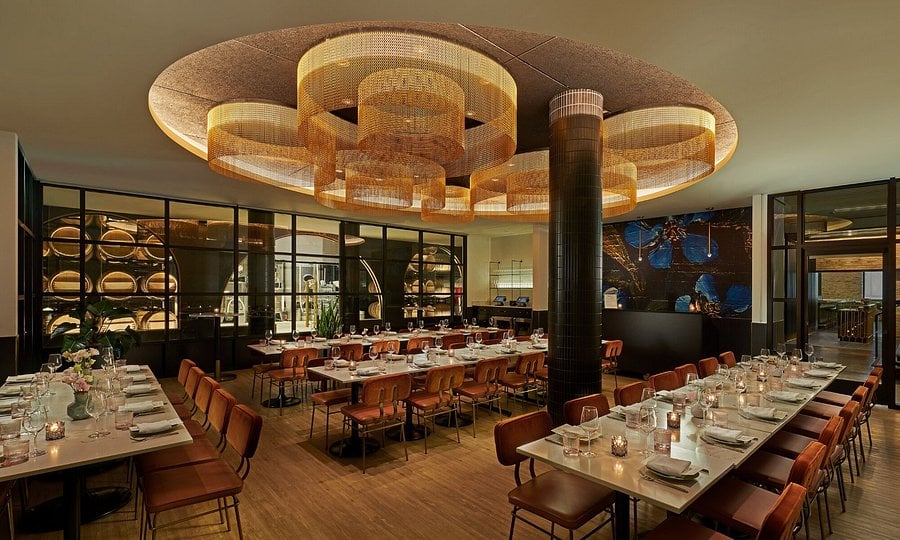
Kasama runs as two restaurants stacked inside one address. During the day, it's first-come, first-served counter service starting at 9 a.m., and the line often forms before the doors open. At night, the same kitchen turns into a 13-course tasting menu that has run $285 per person, with an optional wine pairing at $185 or a non-alcoholic pairing at $95, and reservations that have booked out more than a month in advance. Feld operates on a single register: a theater-in-the-round tasting menu where the room is built around watching the kitchen work, with a menu built from ingredients found close to home rather than flown in for effect.
| Kasama (1001 N. Winchester Ave.) | Feld (2018 W. Chicago Ave.) | |
|---|---|---|
| Michelin status as of Nov. 2025 | Two stars (up from one) | One star, plus Green Star |
| Daytime format | Walk-in bakery and counter, opens 9 a.m. | Not applicable |
| Evening format | 13-course tasting menu, reservation required | Tasting menu served theater-in-the-round |
| Sourcing | Modern Filipino, chef-driven | Ingredients from within a four-hour radius |
| How long it took | Opened 2020, first star 2022, two stars 2025 | Opened 2024, starred within 16 months |
Neither restaurant looks anything like the neighborhood's older reputation, and neither one is trying to. That reputation is still very much alive four minutes away.
The neighborhood that was already there
If you have lived in Ukrainian Village for more than a season, the anchors below are probably already part of your rotation, and none of them changed shape because two addresses a few blocks away got a plaque.
Tryzub Ukrainian Kitchen, at 2201 W. Chicago Ave., is still doing brunch built around deruny, handmade varenyky, and syrnyky, with a bar program of house-infused nastoyanka spirits made from fruits, herbs, and honey. All Together Now is still the neighborhood's wine shop and all-day restaurant, built around a cheese counter and the idea that good food is best shared. Forbidden Root, Chicago's first botanical brewery, is still pairing seasonal small plates with beer built around unconventional botanicals. Old Lviv is still serving Ukrainian comfort food behind a storefront that reviewers routinely describe as more humble than the cooking inside deserves. And Boeufhaus, tucked on the Humboldt Park border since chef Brian Ahern and co-owner Jamie Finnegan opened it in 2015, is still turning out a French-and-German-leaning menu built on sustainably raised meat in a small, loud, unmistakably neighborhood room.
None of these places needed Michelin's attention to matter here. They were already doing the daily work of feeding the block.
What two stars actually changed, and what it didn't
Be specific about what shifted. Two addresses in Ukrainian Village now draw a citywide, and increasingly national, audience that used to drive past the neighborhood toward the Loop or the West Loop for a special occasion. Reservations at Kasama's tasting menu and seats at Feld now require the kind of planning that a destination restaurant demands, whether the destination happens to sit in your own zip code or not.
What didn't change is the rest of the neighborhood's rhythm. Nobody needs a reservation for pierogi at Old Lviv. The line at Kasama's bakery counter in the morning is still a line for a croissant, not a status marker, even if the same kitchen holds two stars by nightfall. Tryzub's brunch crowd is still mostly people who live within walking distance. The recognition landed on two specific buildings. It did not rename the neighborhood or rewrite what most people here actually do on a Tuesday night.
That is, in the end, the useful way to think about a story like this. A neighborhood can hold a genuinely rare culinary achievement and its own ordinary daily life at the same time, on the same six blocks, without either one crowding the other out. If you already live here, that combination is probably the reason you like it.
If you are weighing a move into Ukrainian Village, or you are already here and thinking about what your home could be worth in a neighborhood that just picked up this kind of attention, the Klopas-Stratton Team knows this stretch of Chicago block by block. Reach out any time you want a straight read on the market around you.