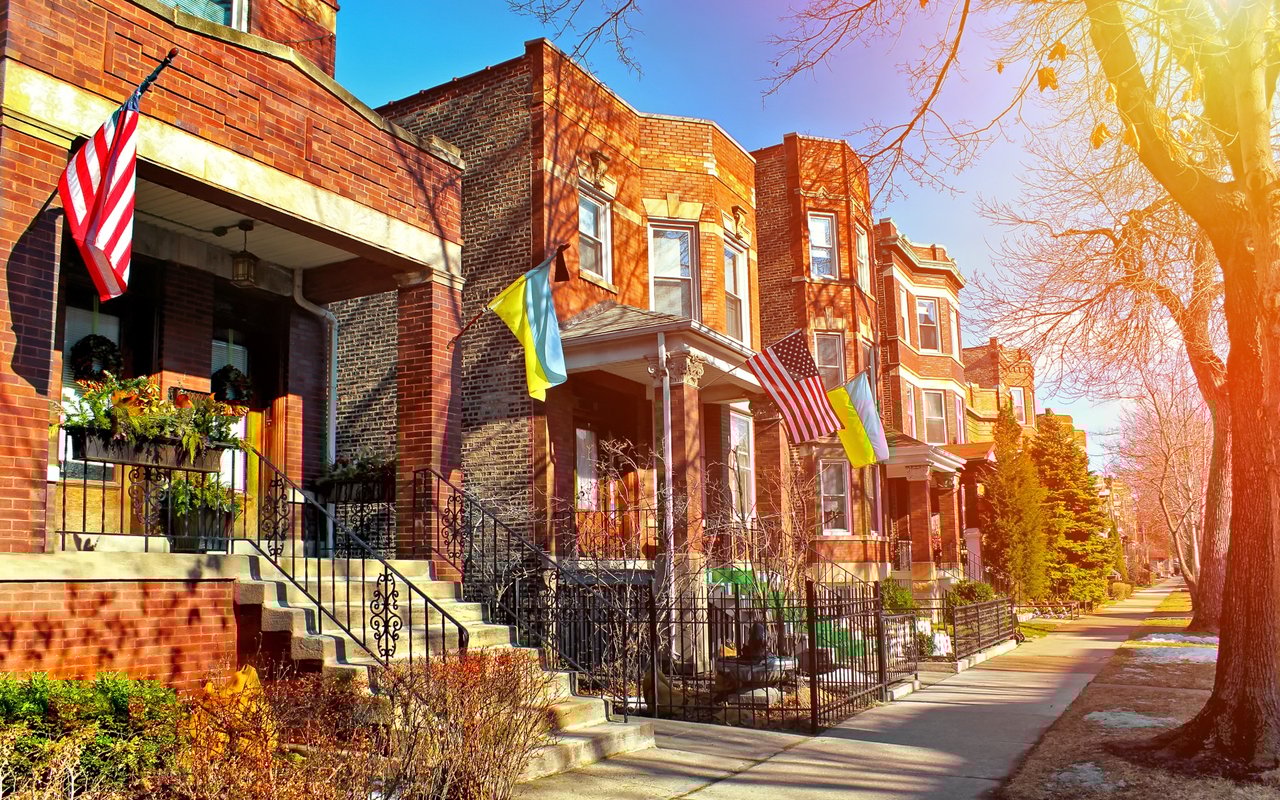
"There's nothing that's available right there for folks. And the neighborhood's exploding, right? New buildings go up every day. It's definitely ripe for it."
That's Mark Litton, a West Town neighbor and one of the volunteers who spent this spring recruiting produce stands and bakers to fill an empty stretch of grass at Eckhart Park. He wasn't describing a trend piece. He was explaining why, after decades of Saturdays with nowhere organized to buy a tomato within walking distance, Noble Square finally has a market of its own.
The Eckhart Park Farmers Market launched June 6 and runs through September 19, and it is worth paying attention to for a reason that has nothing to do with produce. A neighborhood that has been adding housing steadily for years just got its first piece of retail infrastructure built specifically to serve people who already live there, not people passing through on their way to Wicker Park or the West Loop.
The market Noble Square never had
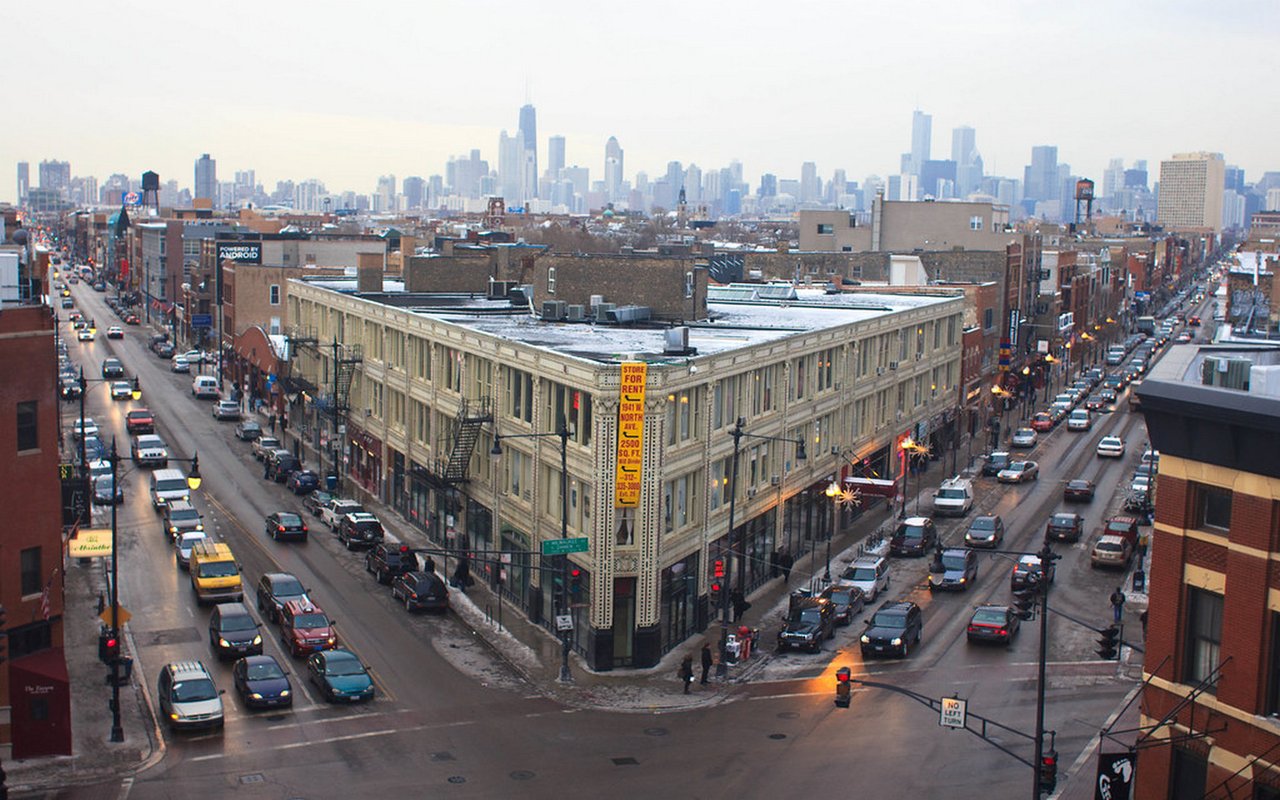
The Blue Line's Division stop sits on Noble Square's eastern edge, and Chicago Avenue anchors its southern flank, but until this summer, neither corridor hosted a full farmers market. Litton and the volunteers organizing with the Eckhart Park Advisory Council have called it West Town's only full-fledged market, and the framing matters. Shoppers who wanted a Saturday morning market had to cross into Wicker Park or head down to the West Loop. For a neighborhood that markets itself on walkability, that was a real gap, not a minor inconvenience.
Here's what the market actually looks like on the ground this season:
| Detail | Specifics |
|---|---|
| Season | June 6 through September 19, 2026 (its inaugural year) |
| Hours | Saturdays, 9 a.m. to 1 p.m. |
| Location | Eckhart Park, 1330 W. Chicago Ave. |
| Organizer | Volunteer-run, in partnership with the Eckhart Park Advisory Council |
| Vendor mix | Produce, baked goods, prepared food, and local makers |
If you're reading this on a weekend in August, the market is still running. The next Saturdays on the calendar are August 15, August 22, and August 29, all in the same 9 a.m. to 1 p.m. window at the park.
Fifteen vendors in April, a bigger ask by June
Back in April, Litton and the other organizers had locked in about 15 vendors and were hoping to more than double that number to roughly 40 before opening day, with produce growers as the priority gap they were still working to fill. That's a useful number because it tells you something a ribbon cutting alone wouldn't: this wasn't a market backed by a chamber of commerce with a full roster ready to go. It was neighbors building a vendor list from scratch, block by block, in the months before launch.
That kind of grassroots build matters for how you read the market's staying power. A market that has to earn its vendor list every season behaves differently than one with an institutional pipeline behind it. The first year is the test. If you shop it this month, you're seeing the version of Noble Square that decided to build something instead of waiting for someone else to.
The park already knew how to do this job
Eckhart Park wasn't designed as a blank patch of green that happened to have room for folding tables. It was one of the first parks authorized under 1905 state legislation to bring small, purpose-built green space to Chicago's crowded West Side neighborhoods, and landscape architect Jens Jensen began laying it out in 1907 specifically to give "breathing space and social services" to what was then a dense immigrant tenement district, according to the Chicago Park District's own history of the site.
That mission has aged well. The park still functions as a hub rather than a single-use amenity: baseball diamonds, a football and soccer field, a playground with a water spray feature, and a community garden share the grounds, alongside indoor space where neighborhood kids come for gymnastics and swim lessons. A farmers market slotting into that mix isn't a departure from what Eckhart Park has always done. It's the same job the park was built for in 1907, just with produce stands instead of settlement-house programming, and a density problem that now comes from new construction instead of overcrowded tenements.
Chicago Avenue was already warmed up for this
Part of why the market works is that it didn't have to create a food culture from nothing. Chicago Avenue, a few blocks south of the park, already had a working corridor waiting for a reason to draw more Saturday morning foot traffic. Flo Cafe & Bar serves brunch a short walk from the market gates, Roots Handmade Pizza handles Quad Cities-style pies up the street, and Chicago Empanada Mama pairs empanadas with specialty coffee close enough to stop into on the way home with a market haul. None of it needed the market to exist. It just needed a reason to see more people on a Saturday morning, and now it has one.
That existing infrastructure is the quiet reason this market could launch fast and still feel like it belongs, rather than arriving as an import. A neighborhood only gets a market this functional this quickly if the surrounding blocks were already doing their part.
Extending the day
If a Saturday morning at the market isn't enough, Noble Square gives you a few reasons to stretch it. The Polish Museum of America sits inside the neighborhood and has held its collection of Polish art and archival material since 1935, a reminder that this stretch of West Town carries a specific immigrant history that predates almost everything currently opening around it. The neighborhood's Do Division Street Fest is a longer-running annual tradition on the same streets the market has spent this summer building new Saturday habits around.
For an evening cap, Wicker Park's Den Theatre and the Chopin Theatre on Division are both a short walk away, giving a Saturday that starts with a produce stand at Eckhart Park somewhere to land after dark.
What the market is actually telling you
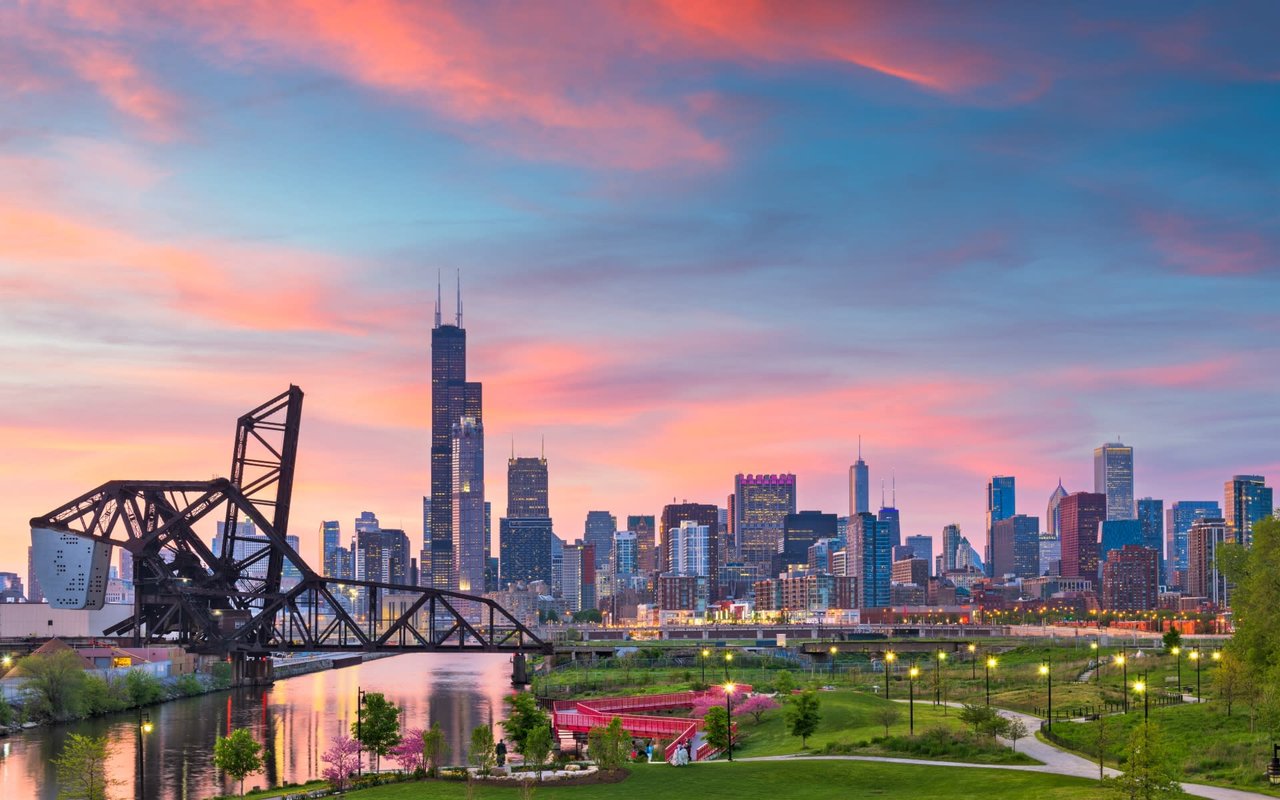
A single farmers market is a small thing to build a neighborhood story around, but the timing is the story. Noble Square has been adding new construction for years. What it hadn't added, until this summer, was a piece of community infrastructure built around the people already living there instead of the people arriving next. Litton's read on it, that the neighborhood is "exploding" with new buildings and finally "ripe" for something like this, is the clearest evidence available that Noble Square's growth has outpaced its retail catch-up, and that this market is one of the first visible signs of that gap closing.
If you already live in Noble Square, that's worth knowing not because it changes your Saturday plans, but because it tells you what kind of neighborhood you're actually in right now: one still building its own infrastructure in real time, with residents doing a fair share of that building themselves.
If you're weighing whether Noble Square is the kind of neighborhood where that pattern continues, or thinking about what a market like this signals for a block you're considering, the Klopas-Stratton Team tracks these shifts across Chicago's North and West Side neighborhoods as part of daily work, not as a seasonal feature. Contact us when you want a read on what a neighborhood's rhythm actually looks like before you commit to it.